 11
CHENNAI — In jurisprudence, few tensions are as delicate as the balance between shielding vulnerable survivors of heinous crimes and preserving the constitutional liberty of the press to hold state power accountable. On September 25, 2026, the Madras High Court stood precisely at this crossroads when it issued an interim order restraining mainstream media, digital news channels, and social media commentators from discussing the “factual matrix” of the ongoing Protection of Children from Sexual Offences (POCSO) Act investigation involving 84-year-old Gem Granites founder R. Veeramani and his associates.
The judicial anxiety underpinning the Madras High Court’s directive is undeniably rooted in statutory sanctity: the urgent imperative to prevent the circulation of sensitive digital evidence, arrest the secondary victimisation of minor girls, and preserve the integrity of a fragile probe. Yet, by extending judicial restraint to the entire “factual matrix” of the crime, the order brings back an enduring constitutional dilemma that Indian democracy thought it had settled eight years ago: When the law draws a curtain over an ongoing investigation to protect a victim, does it inadvertently shield the executive and police machinery from public scrutiny?
Section 23 of the POCSO Act, 2012, is an essential statutory shield. It categorically bars any person or media organisation from making reports or presenting comments that infringe upon the child’s privacy or lower their reputation. Under Section 23(2), any disclosure of a child victim’s identity—including their name, address, photograph, family background, school, or any incidental detail capable of leading to identification—is a cognisable criminal offence punishable with imprisonment.
In its landmark 2018 ruling in Nipun Saxena v. Union of India, the Supreme Court gave this protection the widest possible amplitude, emphasizing that victim anonymity is absolute, surviving even the death of a victim. No reasonable voice in constitutional journalism disputes the sanctity of this perimeter. The dissemination of child sexual abuse material (CSEAM), leaked interrogation clips, or identifying markers is neither journalism nor protected speech; it is a statutory crime.
However, an acute constitutional crisis arises when judicial restraint expands from protecting survivor identity to imposing blanket embargoes on reporting the conduct of the investigation. Under Article 19(1)(a) of the Constitution, freedom of speech and the press is guaranteed not as a corporate privilege for newsrooms, but as an indispensable instrument of citizen oversight. The Supreme Court established in State of U.P. v. Raj Narain (1975) that the public’s “right to know” is a direct corollary of democratic governance.
The contemporary debate in Chennai mirrors almost verbatim the legal confrontation that unfolded in the Muzaffarpur shelter home horror in 2018. In that case, where over 34 minor girls were subjected to systematic, brutal sexual exploitation inside a state-funded shelter home run by Brajesh Thakur, the Patna High Court on August 23, 2018, ordered a sweeping media embargo: “till the investigation is completed, all the print and electronic media are hereby restrained from reporting anything with respect to the case, more particularly, with respect to the investigation already undertaken.”
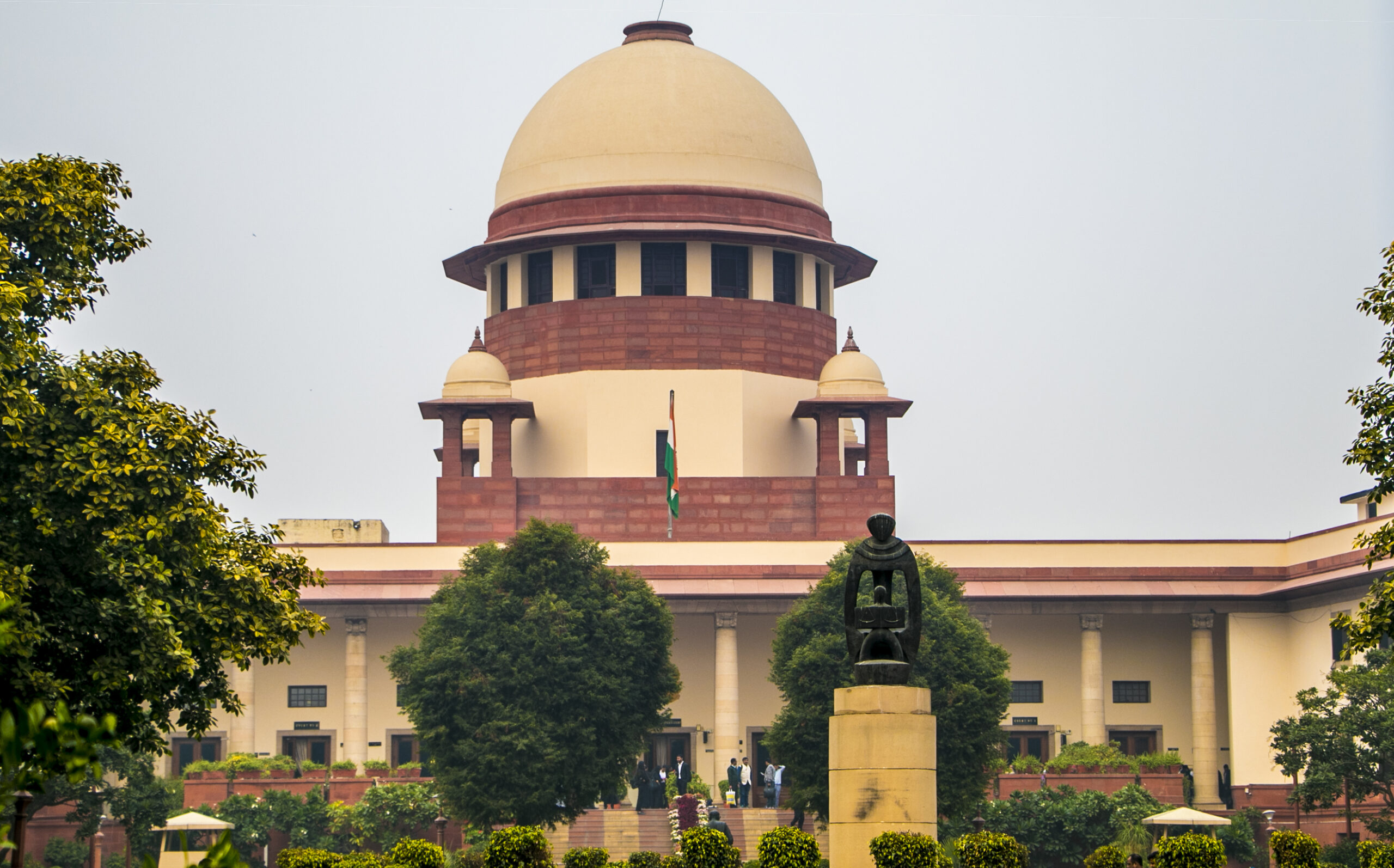
Independent journalist Nivedita Jha challenged this blanket muzzle before the Supreme Court. On September 20, 2018, a bench headed by Chief Justice Dipak Misra, along with Justices A.M. Khanwilkar and D.Y. Chandrachud, overturned the Patna High Court’s blanket ban.
The Supreme Court drew a sharp, unequivocal line between irresponsible sensationalism and legitimate public-interest reporting:
The Supreme Court recognized that barring the Fourth Estate from reporting on the investigation strips the public of its sole window into executive diligence, creating an opaque vacuum where administrative collusion can flourish unchecked.
The necessity of the Supreme Court’s Muzaffarpur doctrine becomes starkly apparent when examining the factual trajectory of the Gem Granites case in Chennai. The timeline reveals profound institutional questions that owe their emergence entirely to public and media vigilance:
Had a blanket gag been clamped on the press in late 2025, would the ten-month investigative slumber ever have been disturbed? Would senior police officers have faced disciplinary reassignment? Would an independent all-women SIT have been constituted?
The answers are self-evident. When courts bar reporting on the “factual matrix” of an investigation, the casualty is not merely media sensationalism; it is police accountability itself.
Prior judicial restraint against the press is constitutionally suspect under Indian law. In Sahara India Real Estate Corp. Ltd. v. SEBI (2012), a Constitution Bench established the “postponement of publication” doctrine under Articles 19(1)(a), 19(2), and 21. The Court ruled that an order postponing or restricting media reporting can only be passed if:
A judicial order directing an investigating agency to issue weekly press releases while barring independent journalistic analysis of the factual matrix struggles to meet this test of proportionality. A state-curated press release is an official handout; it reflects the narrative the police wish to present. The historic function of the press is precisely to cross-examine that official narrative against reality.
The Madras High Court’s indignation at digital voyeurism, sensational YouTube thumbnails, and the reckless circulation of sensitive video clips is legally and morally unassailable. Platforms and content creators who trade in the trauma of children must face the full punitive wrath of Section 23 of POCSO and Section 67B of the Information Technology Act.
However, the judicial scalpel must never be replaced with a sledgehammer. The Supreme Court’s 2018 Muzaffarpur ruling established an enduring democratic truth: safeguarding the victim does not require granting immunity to the investigator. Courts must enforce stringent redaction, criminalize victim identification, and prohibit the broadcast of illicit materials—while fiercely defending the press’s constitutional right to report on police inaction, forensic integrity, and executive complicity. In the search for justice under POCSO, transparency remains the ultimate safeguard for the innocent and the only deterrent against powerful predators.