 11

COIMBATORE — On a humid September night in 2016, along the dimly lit arterial stretch of Subramaniampalayam near Thudiyalur, a 36-year-old two-wheeler rider was ambushed by four men riding two motorcycles. Within seconds, eleven brutal strikes with heavy billhooks and sickles silenced C. Sasikumar, a prominent district spokesperson for the Hindu Munnani. By daybreak, Coimbatore—the industrial powerhouse of western Tamil Nadu—was engulfed in an inferno of communal fury: state transport buses torched, shops ransacked, commercial arteries barricaded, and police detachments besieged.
What initially presented itself to local police stations as an escalated neighborhood flare-up—rooted in petty disputes over flagpole installations and aggressive territorial posturing—soon unfolded into something vastly more sinister. Exactly ten years later, the final gavel of the Special Court for National Investigation Agency (NIA) cases in Poonamallee has brought down the curtain on one of Tamil Nadu’s most consequential political assassination trials, handing down rigorous life sentences under the Unlawful Activities (Prevention) Act (UAPA).
Beyond the immediate retribution of the courtroom, the Sasikumar verdict offers an unsparing autopsy of modern radicalization: how localized communal frictions are weaponized into targeted terror hits, the clandestine operational discipline of modular hit squads, and the unforgiving legal reality of anti-terror convictions where statutory remission is an absolute impossibility.
To understand the execution of Sasikumar, one must look past the midnight ambush and trace the months of simmering ground tension in the textile belt spanning Thudiyalur, Mettupalayam, and Saibaba Colony in early 2016. The catalyst was deceptively pedestrian: disputes over the right to plant organizational flagpoles, fiery counter-demonstrations, and provocative social media rhetoric exchanged between cadres of the Hindu Munnani and local affiliates of the Popular Front of India (PFI) and Social Democratic Party of India (SDPI).
Sasikumar, an outspoken and energetic organizer, had become the visible public face of Hindu Munnani mobilization in the northern suburbs of Coimbatore. In the polarized local ecosystem, his high visibility made him a designated target. Radical ideologues did not see a local polemicist; they saw a symbol whose elimination would simultaneously settle a territorial grudge and ignite wide-scale civil destabilization.
When the investigation was formally transferred from Tamil Nadu’s Crime Branch-CID (CB-CID) to the National Investigation Agency in early 2018 (re-registered as RC-01/2018/NIA/DLI), central investigators unearthed an operational sophistication that shocked state intelligence units. The killing was not a spontaneous riotous scuffle; it was an intelligence-grade, compartmentalized operation:
The NIA’s chargesheet established that the assassination satisfied every benchmark of a “terrorist act” under Section 15 of the UAPA: it was deliberately designed to strike terror in a section of the populace, spark communal rioting, and impair public order across the state.
Bringing the conspiracy from the asphalt of Thudiyalur to a conviction in the NIA Special Court required a monumental forensic effort over nearly 3,600 days. Proving conspiracy under UAPA requires stringing together circumstantial evidence that brooks no reasonable doubt:
| Investigative Phase | Agency Responsible | Key Breakthroughs & Milestones |
|---|---|---|
| 2016–2017 | Thudiyalur Police & CB-CID | Initial FIR 624/2016; recovery of abandoned getaway vehicles; identification of prime suspects; preliminary ballistic and forensic autopsy reports documenting 11 incised wounds. |
| 2018–2019 | National Investigation Agency (NIA) | Case re-registered as RC-01/2018/NIA/DLI; invocation of UAPA Sections 16, 18, 18B, and 20; forensic retrieval of deleted digital footprints and tower-dump CDR correlations. |
| 2020–2023 | NIA Special Court, Poonamallee | Examination of over 100 prosecution witnesses; implementation of strict witness identity protection protocols under Section 44 UAPA to shield key eyewitnesses from intimidation. |
| 2024–2026 | Judicial Adjudication & Verdict | Final arguments on criminal conspiracy (IPC 120B) and terrorist acts (UAPA 16); delivery of life imprisonment sentences with absolute statutory finality. |
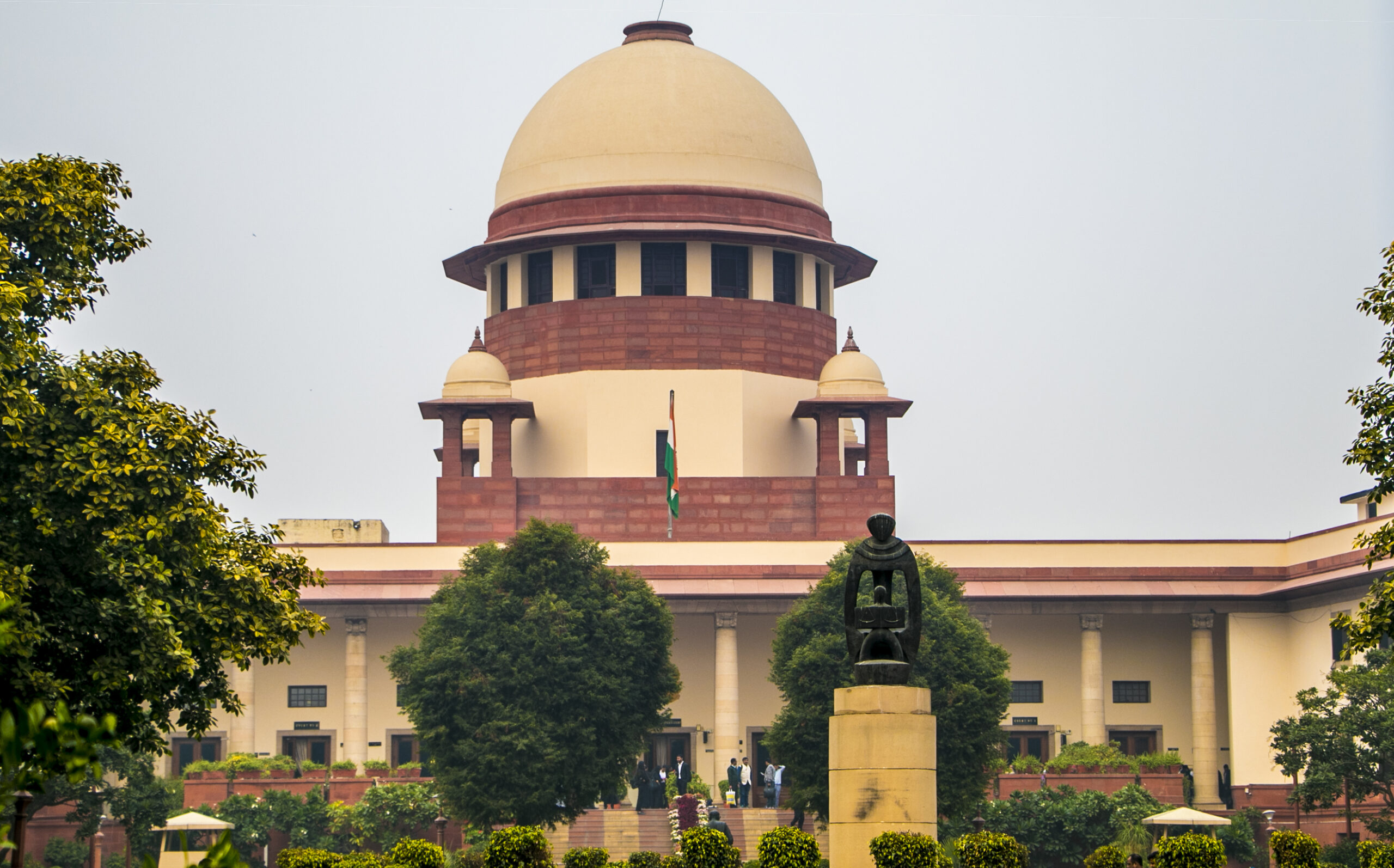
Perhaps the most sobering dimension of the Poonamallee verdict is the legal finality awaiting the convicts. In standard criminal homicide cases prosecuted under Section 302 of the Indian Penal Code (or Section 103 of the Bharatiya Nyaya Sanhita), life imprisonment often proves elastic. State governments routinely deploy executive discretion under Sections 432 and 433 of the CrPC to grant premature release to lifers on commemorative milestones, birth anniversaries of political icons, or state holidays after 14 to 20 years.
Under an NIA conviction featuring the Unlawful Activities (Prevention) Act, that executive door is welded shut:
The tragedy of Thudiyalur is a masterclass in the devastating arithmetic of communal extremism. In a span of minutes, a young political activist lost his life, a family was shattered, and an entire industrial metropolis was brought to its knees by retaliatory arson and collective mistrust. For the young men who formed the hit squad, radical indoctrination promised ideological martyrdom and local dominance; a decade later, it has purchased them permanent obscurity behind the reinforced concrete walls of a high-security prison.
The Sasikumar judgment stands as a powerful institutional statement: communal hits cannot masquerade as localized political rivalries. When violence is deployed to fracture the social fabric, the investigative machinery of the republic may move slowly, but its eventual arrival is absolute, unsparing, and irreversible.